Bagua Zhang Gao Yi Sheng Houtian Line 2 Linking
Showing posts with label Gao Yi Sheng. Show all posts
Showing posts with label Gao Yi Sheng. Show all posts
Monday, September 10, 2018


Sunday, May 14, 2017
The Cheng School Gao Style Baguazhang Manual - Book Review

The Cheng School Gao
Style Baguazhang Manual: Gao Yisheng's Bagua Twisting-Body Connected Palm
Paperback by Gao Yisheng (Author),
Liu Fengcai (Editor), John Groschwitz (Translator)
The Chinese internal martial art of Bagua Zhang, the eight
change of the palm, is an art with similarities to Tai Chi Chuan. The author of
the book, Gao Yi Sheng, was a student of one the all-time greats of Bagua
Zhang, Ching Ting Hua. Gao’s innovation to and standardization of the Cheng
Bagua curriculum, as well as his well know fighting ability, earned him a
branch of the Cheng school.
The recounting of Gao’s life is almost worth the price of
the book. These types of martial histories, while not always accurate, give us
insight into the developmental process Gao went through and how he innovated on
what he learned. They may not be a way to explore motive but expand our
thinking about the influences he was exposed to in the creation of the straight
line sets. Also included is the life history of his nephew and student Liu Feng
Cai and many of the students in his lineage.
This book is not a teaching book, it was written as a
resource for the “in door” students and never meant to be published. If you had
access to the book you were a long term, in door student who was already
familiar with the basics postures, stances, and movements. This is why the book
is heavy on theory, basic rules of the system, etc., and not a posture by
posture teaching book.
Also, you cannot learn a martial art as complex as Bagua
Zhang (or Taiji Quan or Xingyi Quan for that matter) from a book. It is not
possible unless you have years of experience with basic stancing, body
mechanics, had position, application, etc. Learning these arts is time
consuming and arduous. Even with a good, open teacher and a willing student it
is difficult to learn and will take years of dedication and training.
This book is the official standard for the curriculum of the
Gao lineage. Its contents are a must for all practitioner of Bagua Zhang in the
Gao system or the Cheng Bagua school.
I am a 20 year practitioner and teacher of Xingyi Quan, Gao
Bagua Zhang and Tai Chi Quan
Saturday, May 9, 2015

Saturday, September 20, 2014
Bagua - Gao Style Bagua Cane!
Early in his life Gao Yi Sheng (founder of Gao Style Bagua Zhang) broke his leg in an accident involving a cart. The leg was not properly set and he walked with a cane for the rest of his life, because of this he developed this "Bagua Cane" form.
Wednesday, September 10, 2014
Bagua Zhang - Gao Yi Sheng's Teacher Cheng Ting Hua

He Jin, Feng Junyi, Cheng Ting Hua & Cheng You Long
Cheng Ting Hua is the founder of Cheng Style Bagua Zhang, a direct student of Bagua creator Dong Hai Chuan and one of Gao Yi Sheng's Bagua teachers. Cheng You Long is his first son.
Friday, August 8, 2014
Bagua Zhang - Gao School - Ze Zong Branch
This is the school of Wu Meng Xia (Ze Zong), a top student of Gao Bagua Zhang Founder Gao Yi Sheng.
广华哲宗同易派 GuǎngHuá Zhézōng Tóngyì Pài (Mountain)(108 Moves)

广华哲宗同易派 GuǎngHuá Zhézōng Tóngyì Pài (Mountain)(108 Moves)
4 Big parts:
本 Běn is for Xiāntiān Parts
解 Jiè is for Hòutiān Parts
拆 Chāi is for two people sets
变 Biàn is for free sparring with what is learned.
Xiāntiān Portion: 先天龙形穿化掌 (dragon changing) (14)
1. The Four Types of Postures (4)
站 zhàn standing
靠 kào leaning
行 xíng walking
卧 wò lying down
2. Single Palm Change (1)
单换掌 dān huàn zhǎng Single Palm Change
3. Xiāntiān Eight Big Circle Changes (8)
a. Four "Animal" Changes
蛇形顺势掌 shé xíng shùnshì zhǎng snake form moving with the force palm
龙形穿手掌 lóng xíng chuān shǒu zhǎng dragon form piercing hands palm
虎形回身掌 huíshēn dǎ hǔ zhǎng turning body hitting tiger palm
燕形盖手掌 yàn xíng gài shǒu zhǎng swallow overturning & covering strike
b. Four "Body" Changes
转身反背掌 zhuǎn shēn fǎn bēi zhǎng turning body against back palm
拧身探马掌 níng shēn tàn mǎ zhǎng twisting body probing horse palm
翻身背插掌 fān shēn bèi chā zhǎng overturning body back sticking palm
停身搬扣掌 tíng shēn bān kòu zhǎng stopping body, moving capturing palm
4. 五龙摆尾掌: wǔ lóng bǎi wěi zhǎng: Five Dragons wave tails palm (1)
一龙摆尾 yì lóng bǎi wěi first dragon waves tail
二龙分水 èr lóng fēn shuǐ second dragon splits the water
三龙探爪 sān lóng tàn zhuǎ third dragon stretches claws
四龙显身 sì lóng xiǎn shēn fourth dragon shows the body
五龙搅柱 wǔ lóng jiǎo zhù fifth dragon clings on the pole
燕子穿林 yàn zi chuān lín swallow flies through the forest
拨草寻蛇 bō cǎo xún shé separate the grass to find the snake
Hòutiān Portion: 后天蛇形缠连掌 (snake winding) (94)
5. 。 Tiāngān 天干 10項单操 xiàng dān cāo (Heavenly Stems Power Training) (10)
扳 bān move
砍 kǎn chop
鵰 diāo whipping knock
撞 zhuàng knock
靠 kào lean
崩 bēng ruin, crush
抓 zhuā grab
掖 yē press in
挫 cuò filing
松 sōng loose up
6. 64 Hòutiān Combat Palms (64)
| 开 kāi | 捧 pěng | 扽 dèn | 探 tàn | 立 lì | 挑 tiāo | 盖 gài | 缠 chán |
| 截 jié | 藏 cáng | 砍 kǎn | 削 xiāo | 二 èr | 虎 hǔ | 夺 duó | 环 huán |
| 穿 chuān | 扳 bān | 劫 jié | 拦 lán | 停 tíng | 翻 fān | 走 zǒu | 转 zhuàn |
| 推 tuī | 托 tuō | 带 dài | 领 lǐng | 粘 zhān | 连 lián | 随 suí | 黏 nián |
| 掖 yē | 挤 jǐ | 刁 diāo | 掳 lu | 崩 bēng | 撞 zhuàng | 扣 kòu | 扳 bān |
| 捯 dáo | 狸 lí | 吸 xī | 挎 kuà | 摇 yáo | 闪 shǎn | 横 héng | 躥 cuān |
| 蹲 dūn | 盘 pán | 坠 zhuì | 顶 dǐng | 横 hèng | 剉 cuò | 叠 dié | 攥 zuàn |
| 趋 qū | 踹 chuài | 摆 bǎi | 挂 guà | 踢 tī | 截 jié | 蹚 tāng | 撞 zhuàng |
7. 地支 Dì Zhī (12 Animals) (12)
龙 lóng dragon
虎 hǔ tiger
蛇 shé snake
豹 bào cougar
鹰 yīng eagle
鸡 jī rooster
凤 fèng phoenix
狮 shī lion
猫 māo cat
猴 hóu monkey
熊 xióng bear
马 mǎ horse
8. 八趟缠掌 Bā Chán Tàng Zhǎng (Eight Sticking Palms) (8)
清 qīng
明 míng
齐 qí
全 quán
合 hé
顾 gù
连 lián
备 bèi
Found:HERE
Friday, December 27, 2013
Internal Kung Fu - Gao Style Bagua Zhang - Gao's Teacher (Peerless Palm) Zhou Yuxiang
Zhou
Yu Xiang
Oral Accounts: Zhang Zhenzhi and Hou Jinlong
Recorded by: Li Jishan
Edited by: Qiao Han
Translated by: Joseph Crandall (Found: HERE)
Printed In: Wudang Magazine 2012.8
(Note: Gao Yi Sheng (founder of Gao Style Bagua) was a student of Cheng Ting Hua but learned most of his skills from another Cheng Ting Hua student, Zhou Yuxiang.)

Mr. Zhou Xiang was also known as
Zhou Yuxiang. He was from Tianjin Wuqing Wafang Village. He was born in 1861,
the first year of the reign of Emperor Tongzhi. He was a famous Baguazhang
master. He was our grand teacher. Our teacher was called Xue Zhaoji. He was a
student of Mr. Yuxiang. Mr. Yuxiang was originally a student of Baguazhang
Grandmaster Cheng Tinghua. Around the time that the Eight Nations Allied Armies
entered Beijing, Mr. Cheng was killed by the German forces near the Hade Gate.
Then Mr. Yuxiang became a student of Liu Fengchun. Mr. Yuxiang was obsessed
with the art. He practiced diligently and was an expert. He was braver and
stronger than most men. Because his skills in Baguazhang were so deep, that Mr.
Yuxiang had a special introduction in The Register of Famous Martial
Artists. In Tianjin there was a famous Baguazhang master of the
previous generation named Mr. Zhang Zhankui. At first, Mr. Yuxiang also studied
with him. Mr. Zhang Zhankui had a job in Tianjin catching criminals. Every time
he had a tough case he would ask Mr. Yuxiang to help him out. So one can see
that Mr. Zhang Zhankui was completely confident in Mr. Yuxiang’s martial skills.
Extremely Skillful in Martial Arts
Mr. Yuxiang deeply got the true
transmission of Baguazhang from Masters Cheng and Liu. He also received
instruction in Xingyi Quan from the great master, Li Cunyi. He was also a very
good friend with the great Taijiquan master, Li Ruidong. They would often have
mutual exchanges. They learned each other’s strong points to offset their
weaknesses. In addition to his native great strength, his martial arts skills
were very high, particularly his palm skills were deep and vast. Teacher Zhaoji
often quoted Great Master Li Cunyi as saying, "Zhou Mazi’s (Mr. Yuxiang’s
nickname) palm skills are not less than Cuihua Liu’s" (That is Liu
Fengchun’s nickname.) Mr. Li Ziyang often spoke to us in regard to this
evaluation. Still more Mr. Li Ziyang often related to us that because of Mr.
Yuxiang’s great palm skills, each time Mr. Yuxiang and Mr. Zhang Zhankui had
their mutual exchanges, Mr. Zhang Zhankui did not dare to join hands. He had to
resort to using evasion to respond to him. It was that difficult to get the
upper hand. Teacher Zhaoji said, "Mr. Yuxiang talked about how meeting
others throughout his life, very few impressed him. He only admired and
respected Guo Yunshen, Cheng Tinghua, Li Cunyi, Liu Fengchun, Sun Lutang as
great masters and none others." In addition, he also had positive feelings
for the skills of Li Ruidong and Shang Yunsheng. With other people, he often
acted as if they were beneath his notice. In those days, Mr. Yuxiang would
cross hands with practitioners of all the famous styles. In The Register
of Famous Martial Artists, it says that Mr. Yuxiang in his younger
years won fights in famous palaces, one after another defeated two top teachers
of the sixth son and ninth son of the prince.
Mr Li Ziyang spoke about time when
Mr. Yuxiang and Xingyi Quan master, Mr. Ma Yaonan, got together. Mr. Ma Yaonan
was a student of the great Xingyi Quan master Mr. Guo Yunshen. His skills, for
the most part, came from Master Guo. His Xingyi Quan skills were very deep.
During the early years of the Republic he came to Tianjin and often competed
with people from other styles. He rarely had an equal. Mr. Liu Yunji (a student
of Li Cunyi) praised Mr. Ma Yaonan’s high skill in front of Mr. Yuxiang. In
fact he was thinking of urging Mr. Yuxiang and Mr. Ma Yaonan to have a
competition. At last, the two men met at the Wu Shi Hui. Both men were eager to
get to work. Therefore it was not long before they started sparring. They
fought about ten bouts, but neither could beat the other. Mr. Li Cunyi urged
them to take a break. Mr. Li Cunyi said, "You two performed like Zhang Fei
fighting Ma Chao!" This was his way of saying that both men had great
skills.
Mr. Zhang Jinhe told us how Mr.
Yuxiang’s art was equal to the great Ziran master, Du Xinwu. In 1925, Mr.
Yuxiang and his classmate Han Muxia went to Bejing to take care of some
business and get together with their old friends, Mr. Heng Shoushan and Mr.
Zhao Xinzhou. Mr. Heng Shoushan gave a banquet at "The Clay Pot
House". Mr. Zhao Xinzhou’s friend, Mr. Du Xinwu, also came. During the
feast, Mr. Zhao Xinzhou praised Mr. Du Xinwu’s Ziran skills rather highly. When
Mr. Du Xinwu introduced the Ziran skills and he talked a bit about the
wonderful skills of his teacher Mr. Xu. Mr. Yuxiang, was never lightly
convinced by what people said. Therefore he rose up and requested that he and
Mr. Du Xinwu learn from each other by comparing skills in martial arts. Mr.
Heng Shoushan immediately suggested that they use chopsticks to compare skills,
to stop being touched by the point. Mr. Yuxiang and Mr. Du Xinwu faced each
other across a table. Almost simultaneously they started to move. Both men’s
body methods were extremely fast. After about ten exchanges each returned to
their original places. Mr. Du Xinwu saluted to show his respect. Everyone could
see that Mr. Du Xinwu’s chopstick was in Mr. Yuxiang’s hand. Many people
invariably highly praised Mr. Yuxiang’s body method as being extremely fast and
his hand method as being ingenious. But Mr Zhang Jinhe said, "In fact, Mr.
Du Xinwu’s martial skills were extremely good. And when he compared styles with
people, he rarely lost."
One time Mr. Yuxiang was in his
hometown. And Taiji master Mr. Li Ruidong was hanging out with him. Mr. Hao
Ming told us about how at this time Mr. Yuxiang did his best to destroy the
Tongbei master, Mr. Zhang Ce. Mr. Zhang Ce was called the "Arm
Saint". He was skilled in both Taiji and Tongbei, and well as with the
saber. During the Republic era, there was one year that Mr. Zhang Ce returned
to the village. He heard that Mr. Yuxiang was with his family and asked if he
could come visit. At that time it happened that Mr. Hao Ming’s teacher Mr. Li
Zilian was also staying at Mr. Yuxiang’s place. Because Mr. Li Zilian mentioned
that Mr. Zhang Ce, in his early years, once crossed hands with Mr. Xiang
Runtian and was defeated. This was done to provoke Mr. Zhang Ce, and he was not
happy about it. He suggested that he cross hands with Mr. Li Zilian. Because
Mr. Li and Mr. Zhang are both guests, Mr. Yuxiang at once encouraged them
together. Mr. Yuxiang was not good with words, and his urging didn’t have the
result he wanted. Instead it causes Mr. Zhang Ce vent his anger on Mr. Yuxiang.
Mr. Yuxiang had no alternative; thereupon he crossed hands with Mr. Zhang Ce.
In the first bout, Mr. Yuxiang issued into Mr. Zhang Ce. Mr. Zhang Ce ended up
with his head buried in the courtyard’s haystack.
Mr. Zhang Ce got up and immediately
left.
The Hero Battles Bandits
At the beginning of the Republic
there was tangled warfare among the Warlords. Tianjin and Northern China were places
of strategic importance. Many changes were happening. Stragglers and disbanded
soldiers became bandits. The bodyguards in Tianjin were concerned about the
bandits.
One time in Tianjin, they were
guarding a nobleman’s family home at night to protect it against thieves. The
nobleman’s family home was not far from the inside of the north gate. A mixture
of people would come and go through the gate. The road was clear and it was
convenient for bandits to flee this way. After a case was reported to the authorities,
Mr. Yuxiang took over this case. Mr. Yuxiang and other comrades seeking
business analyzed the details of the case. They firmly believed that the
bandits would return in the near future and that they could take advantage of
that. Thereupon they planned to capture the bandits.
He
took advantage of the fact the there would soon be a celebration of the 55th birthday
of nobleman’s uncle. Therefore the idea was to make a big deal of the event. He
would be disguised as a family member bringing gifts. Mr. Yuxiang then dressed
up as accomplished servant went to nobleman’s family home.
Not far from the nobleman’s family
home was the Liu Family Inn. Because Liu Jitai (Mr. Old Two) was also there
seeking to do business, they decided that the others would then in turn hide at
the Liu Family Inn. They agreed that when they heard Mr. Yuxiang blow a
whistle, then everybody would quickly come to assist him.
Three days later, before dawn, some
men called outside the gate of the nobleman’s family home. Mr. Yuxiang was
hidden and not moving. Not far away, a man leaped up onto the wall and jumped
down to open the gate. Four men came inside. They all had rifles. They ran
straight to the front of the main hall. Mr. Yuxiang suddenly appeared from
behind them and gave a great shout. He struck at them suddenly with a python
whip. In the blink of an eye the lash fell on two men. At this time there was a
man on top of the roof with a mauser pistol who started to shoot down at him.
Mr. Yuxiang narrowly escaped the bullets. He immediately flipped and rolled.
Following this he lifted the whip again and lashed and flipped one of the men.
Simultaneously, he quickly advanced and struck the man down with his palm. He
then leaped to the space below the edge of the roof.
He suddenly leaped up onto the roof
and applied his whip. The men were frightened and they got up and fled. He
turned around, stretched out his hands and continuously struck at the rifles.
Among them one rifle rubbed through the skin and flesh of Mr. Yuxiang’s left
shoulder. Blood flowed straight away. When the men jumped down from the roof,
they saw that Mr. Yuxiang was already standing in front of them. He struck one
man straight on the head and he fell down unconscious. At this time, outside
the gate there was a carriage pulled by two bandits ready to come to their aid.
They heard the commotion inside and decided to flee instead.
Eventually his colleagues hidden at
the Liu Family Inn arrived. They saw five men lying in the courtyard, four
rifles and the Mauser pistol all gathered by Mr. Yuxiang’s side. Thereupon they
put the bandits under guard and closed the case. When everyone asked why Mr.
Yuxiang didn’t blow the whistle during the fierce fight with the bandits, Mr.
Yuxiang said, "The situation was urgent. I completely forgot to blow the
whistle."
During the interrogation afterwards,
they realized that this group of bandits all were disbanded soldiers from the
Northeastern Army. Since these bandits really had come from the military, to
avoid military retaliation in the days to come, they decided to lock up the
people and the affair was never made public.
So you can see Mr. Yuxiang had quite a bit of martial bravery.
Translated by:
Joseph Crandall (Found: HERE)
Saturday, December 21, 2013
Colorado Gao Bagua Zhang - Gao Yi Sheng Quote - Internal Kung Fu
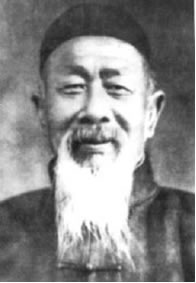 Move and walk like a dragon, the palms like the wind.
When acting, one cannot retain any kind emotions.
If the heart is
compassionate and the face soft, in the end there is no victory.
Black hands and a
ruthless heart makes men fear.
From Gao Yi Sheng’s (Founder of Gao Style Bagua) “old” Bagua manual
Learn Gao Style Bagua - Internal Kung Fu - in Boulder, Colorado Check: HERE
Thursday, December 5, 2013
The Cheng School Gao Style Baguazhang Manual - New!
The Cheng School Gao Style Baguazhang Manual:
Gao Yisheng's Bagua Twisting-Body Connected Palm
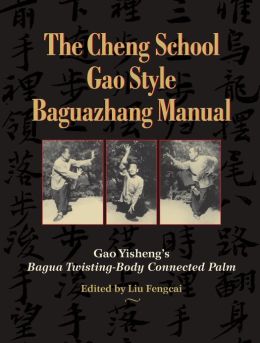
"In its first English-language edition, this detailed training manual is a complete guide to Gao baguazhang, as preserved through the lineage of Liu Fengcai. The youngest of the major bagua lineages, Gao bagua shows the influence of taiji quan, xingyi quan, and shuai jiao. It incorporates traditional bagua weapons, pre-heaven palms, and animal forms in addition to sixty-four individual post-heaven palms and their accompanying two-person forms. A unique synthesis of health-building techniques, Daoist theory, and practical fighting applications, Gao-style bagua is an example of the finest internal-arts traditions.
The original manuscript for The Cheng School Gao Style Baguazhang Manual was completed by the art's founder, Gao Yisheng, in 1936. It was not published at the time, but handed down to his student Liu Fengcai, who edited and published the first Chinese edition in 1991 with the help of his own student Liu Shuhang. In 2005, Liu Shuhang published a revised and expanded version, and this was again expanded and reissued in a third edition in 2010. Now, the manual has been translated and fully updated for its first English-language edition. Including over 400 photos showing step-by-step techniques and forms, the manual documents the fundamentals of the art as well as detailed descriptions of techniques and empty-hand forms, laying the groundwork for advanced training. This edition includes rare photos of important masters in the Gao lineage, lineage charts, biographies, and other updates, making it the essential companion for anyone studying Gao style and a useful guide for any practitioner of baguazhang or other Chinese martial arts."
The original manuscript for The Cheng School Gao Style Baguazhang Manual was completed by the art's founder, Gao Yisheng, in 1936. It was not published at the time, but handed down to his student Liu Fengcai, who edited and published the first Chinese edition in 1991 with the help of his own student Liu Shuhang. In 2005, Liu Shuhang published a revised and expanded version, and this was again expanded and reissued in a third edition in 2010. Now, the manual has been translated and fully updated for its first English-language edition. Including over 400 photos showing step-by-step techniques and forms, the manual documents the fundamentals of the art as well as detailed descriptions of techniques and empty-hand forms, laying the groundwork for advanced training. This edition includes rare photos of important masters in the Gao lineage, lineage charts, biographies, and other updates, making it the essential companion for anyone studying Gao style and a useful guide for any practitioner of baguazhang or other Chinese martial arts."
Found on Amazon:HERE
Tuesday, October 8, 2013
Gao Style Bagua - Hou Tien - 64 Palms Two Person Set
Gāo Pài Bāguà, Hòutiān Liùshísì Zhǎng Chāi Shǒu -
(Gao Style Bagua Zhang, Post-Heaven 64 Palms Broken Down Hands)
(Gao Style Bagua Zhang, Post-Heaven 64 Palms Broken Down Hands)
Each of the 64 post-heaven palms of Gao Style Bagua can be broken down into a two person set. Each one of the 64 two person sets consists of a sequence of 6 applications, one for each line of the hexagram.
Demonstrated by master Zhang Jianguo and his student of the Cangzhou area Zhang Fuhai lineage of Gao style Bagua.
Zhang Jianguo studied under master Gao Yisheng in Tianjin for over 10 years before bringing his style of Bagua to the Cangzhou region.
Monday, April 1, 2013
Gao Style Bagua Zhang - 64 Linear Palms - Tianjin
"Gāo Pài Bāguà, Hòutiān Liùshísì Zhǎng
(Gao Style Bagua Zhang, Post-Heaven 64 Palms)
Demonstrated by master Zhang Jianguo of Zhang Fuhai's lineage of Gao style Bagua.
Zhang Fuhai studied under master Gao Yisheng in Tianjin for over 10 years before bringing his style of Bagua to the Cangzhou region." TheaSinensisSerpenti
(Gao Style Bagua Zhang, Post-Heaven 64 Palms)
Demonstrated by master Zhang Jianguo of Zhang Fuhai's lineage of Gao style Bagua.
Zhang Fuhai studied under master Gao Yisheng in Tianjin for over 10 years before bringing his style of Bagua to the Cangzhou region." TheaSinensisSerpenti
Thursday, March 28, 2013
Gao Style Bagua - Cane
GaoShi BaGuaZhang, WenMing Guai / Gao style BaGuaZhang Cane (literally "Civilized Crutch")
The cane was known to be the everyday weapon of choice of Gao style BaGuaZhang founder Gao Yisheng.
Sunday, March 24, 2013
Gao Style Bagua Jian
Demonstrated by master Wen ZhongShi. Wen Zhongshi originally studied Liu He Quan as a child before beginning to learn Gao style Bagua from master Zhang Fuhai. Master Zhang Fuhai had studied Bagua Zhang with master Gao Yisheng in Tianjin for over 10 years before bringing the system to Cangzhou where it is still taught today. From the TheaSinensisSerpenti
Subscribe to:
Posts (Atom)
Boulder Internal Arts - Classes Ongoing in 2026
Although I don't post much here anymore. We are still training and teaching in Boulder, Colorado USA after 20 years! Boulder Internal A...

-
 FOUND HERE - Dragons Armory web site Jinyiwei: Ming Elite Guards 錦衣衛 1. Bloodhounds ...
 -
Here is Gao Style Bagua practitioner C.S. Tang performing his version of the Tian Gan - Heavenly Stems Nei Gong set.
-
Since i don't speak Chinese i assume these guy are martial artists.

